Business EV charging: at home, in public or at the office?
Business EV drivers can charge in several places: at home, on the road or at the office. Which option is most practical depends on where the car is parked, how many kilometres you drive and how often you need to recharge while travelling. In practice, many business drivers therefore use a combination of charging options. In this article, we compare home charging, public charging and workplace charging and explain what to consider in each situation.
The best charging solution depends on your daily journeys
There is no single charging solution that works best for every business driver. Someone who parks at home every evening has different options from an employee without a private driveway. And drivers who visit many clients or cover long distances are more likely to use public charging points and rapid chargers.
Do not look only at the price per kilowatt-hour. Consider how the charging solution works in everyday use. Availability, charging speed, travel time and convenience ultimately determine how practical a charging option really is.
| Charging option | Best suited to | Main point to consider |
|---|---|---|
| Home charging | Drivers who can park at home and regularly use the same car | Charging point, electricity connection and reimbursement of business charging costs |
| Public charging | Drivers without a private charging space or who spend a lot of time on the road | Availability and differences in charging tariffs |
| Workplace charging | Employees whose cars are regularly parked at the same workplace for several hours | Enough charging points and distribution of available charging capacity |
In short: home charging is often practical when the car is parked overnight, workplace charging works well on regular office days and public charging gives you flexibility on the road. For many business drivers, a combination works best.
Home charging: charge the car while you are not driving
If you can park the company EV at home, home charging is often a practical starting point. The car is usually parked for several hours in the evening and overnight, giving you enough time to recharge the battery. This means you do not have to make a separate stop at a public charging point before the next working day.
A private charging point does require some preparation. You need a suitable parking space and an electrical installation that can handle the charging load. It is also important to agree in advance how business charging costs will be recorded and reimbursed when the electricity is supplied through the employee’s private household connection.
Look at your daily mileage
When charging at home, battery size is not the only thing that matters. Look mainly at how much energy you use on a normal working day. If you only use a limited part of the car’s range each day, you usually do not need to recharge a completely empty battery every evening.
This is one of the ways EV driving differs from refuelling a petrol or diesel car. You do not have to wait until the battery is nearly empty, but can recharge regularly while the car is already parked. For many business journeys, a charging point with a standard charging speed can therefore be more than sufficient.
Public charging: flexible when you do not have a fixed charging space
Not every business driver has access to a private charging point at home or at work. Public charging points then become an important part of everyday use. They are also useful when you want to recharge during a client visit, appointment or longer journey.
The disadvantage is that you have less control over availability and price. A charging point may already be occupied, and costs can vary by location, provider and charging card. So do not only check where charging points are located, but also how well the public charging network fits your regular routes and destinations.
Regular charging or rapid charging?
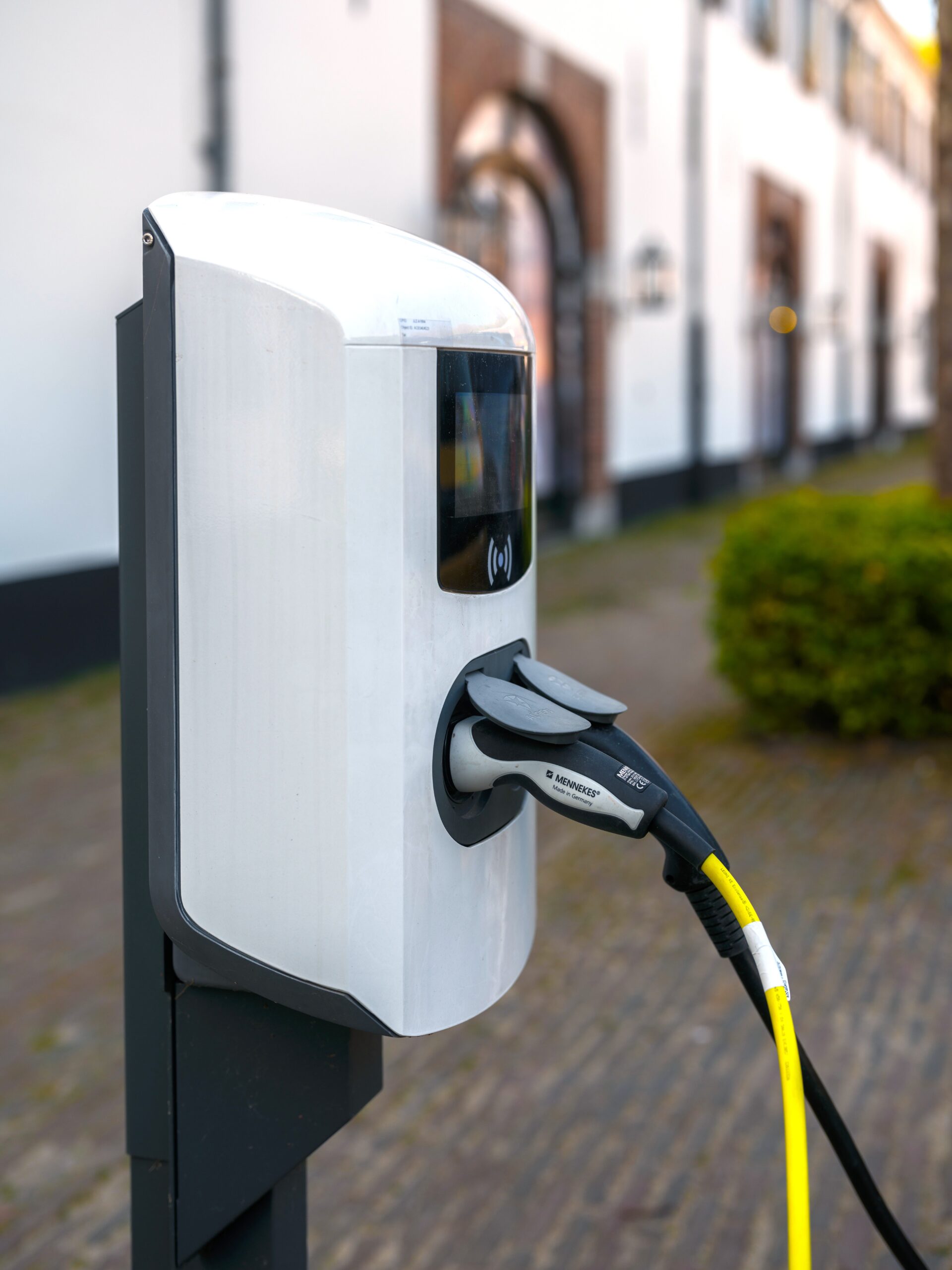
Public charging can broadly be divided into regular charging and rapid charging. A regular charging point works well when the car will be parked for a longer period, for example during an appointment or working day. A rapid charger is particularly useful when you need extra range quickly while travelling.
Rapid charging is therefore mainly about saving time. There is usually no need to seek out a rapid charger for every daily charging session if you can charge at home, at the office or during longer stops. It is especially useful on days when you drive more kilometres than usual.
Practical tip: when choosing an electric company car, do not focus only on maximum range. Also check where you can realistically charge during a normal working week.
Workplace charging: convenient during the working day
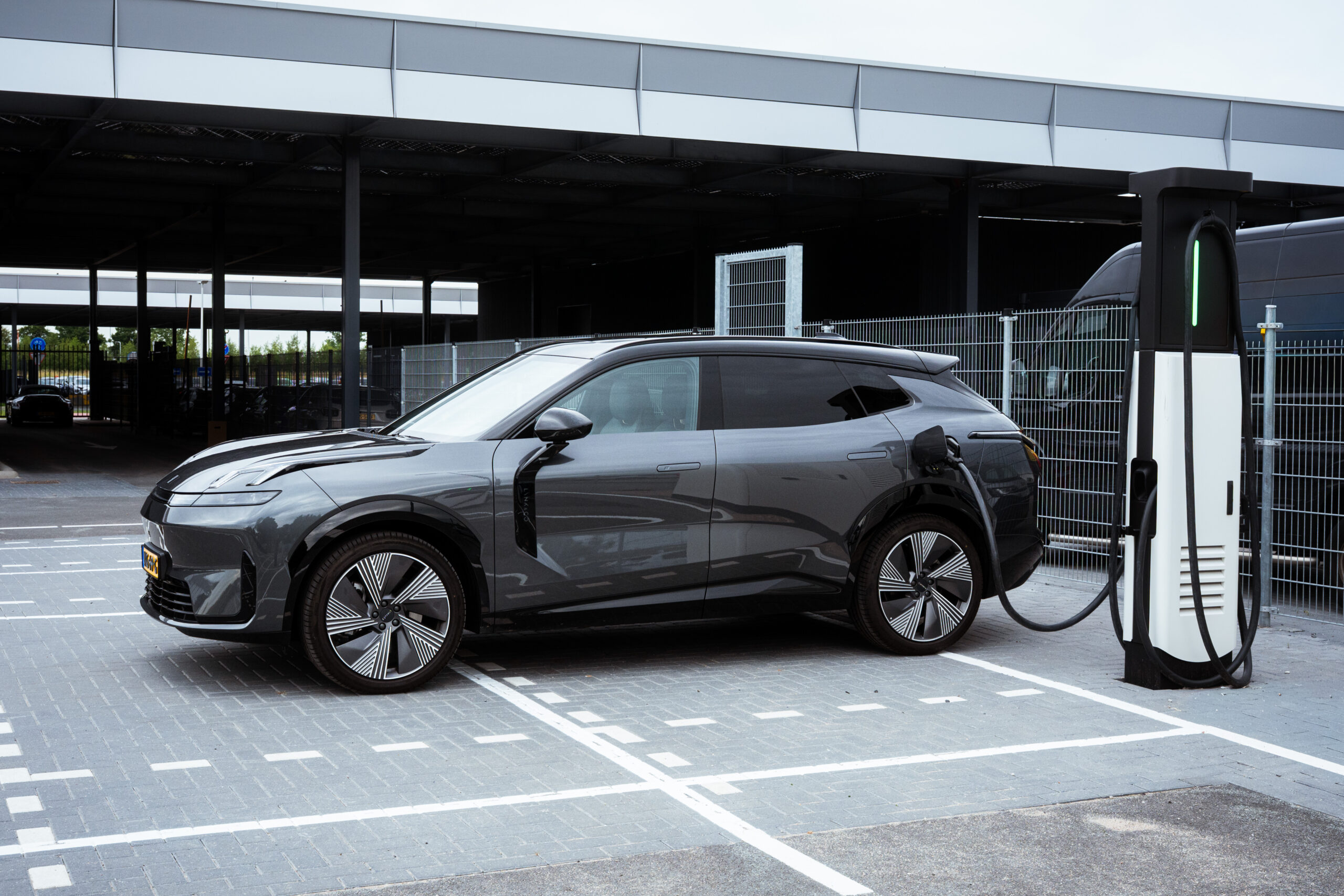
On a typical working day, an electric car often spends several hours in the same parking space. This makes the workplace a logical place to charge. Employees can plug in the car when they arrive and leave later in the day with additional range, without needing a separate charging stop.
For employers, the main challenge is capacity. One charging point may be sufficient when only a few employees drive electric cars, but a larger fleet requires more thought about the number of connections, available power and how charging points are shared.
Not every car needs to charge at maximum power at the same time
Cars that remain at the office for eight hours usually do not all need to charge as quickly as possible. By distributing the available power intelligently across several cars, the existing electricity connection can be used more efficiently. This is often managed with load balancing or a charging management system.
For an employer, it is therefore more useful to look at the fleet’s total charging requirement than only at the maximum power of one charging point. How many cars are parked there each day, how many kilometres do they cover and how long do they remain parked? These questions give a better picture of the charging infrastructure you actually need.
Home charging, public charging and workplace charging compared
| Factor | Home charging | Public charging | Workplace charging |
|---|---|---|---|
| Availability | High if you have your own charging space | Depends on charging points in the area | Depends on the number of charging points at work |
| Convenience | Charge while the car is parked at home | Flexible on the road and at your destination | Charge during the working day |
| Charging speed | Depends on the charging point and electrical connection | From regular charging to rapid charging | Depends on the installation and power distribution |
| Costs | Depends on electricity tariff and installation | Tariffs vary by charging point and provider | Depends on the company charging arrangement and energy costs |
| Main limitation | Requires a private parking space and suitable connection | Charging point may be occupied | Available capacity has to be shared between employees |
Which charging option suits your situation?
The most practical solution mainly depends on where the car spends most of its time parked. An employee with a private driveway and a regular work pattern may be able to do most charging at home. Someone who is at the office every day may rely mainly on workplace charging. A field-based employee who visits many different locations will benefit more from a strong network of public charging points.
- You can park at home: check whether a private charging point is practical and how business charging costs will be recorded.
- Your car is parked at the office for long periods: check whether charging during working hours is enough for your daily mileage.
- You travel to many different locations: check public charging points along your main routes.
- You regularly drive long distances: check the availability of rapid chargers as well as regular charging points.
Combining charging options often gives you the most flexibility
You do not have to choose a single charging method. For business EV use, it often makes sense to combine several charging options. The car can charge at home overnight, at the office during the working day and on the road only when necessary.
This reduces your dependence on one charging location. If the charging point at the office is occupied or you unexpectedly need to make a longer journey, you have an alternative. For employees with varied driving patterns, that flexibility can be at least as important as finding the lowest charging tariff.
When choosing an EV, also consider your charging habits
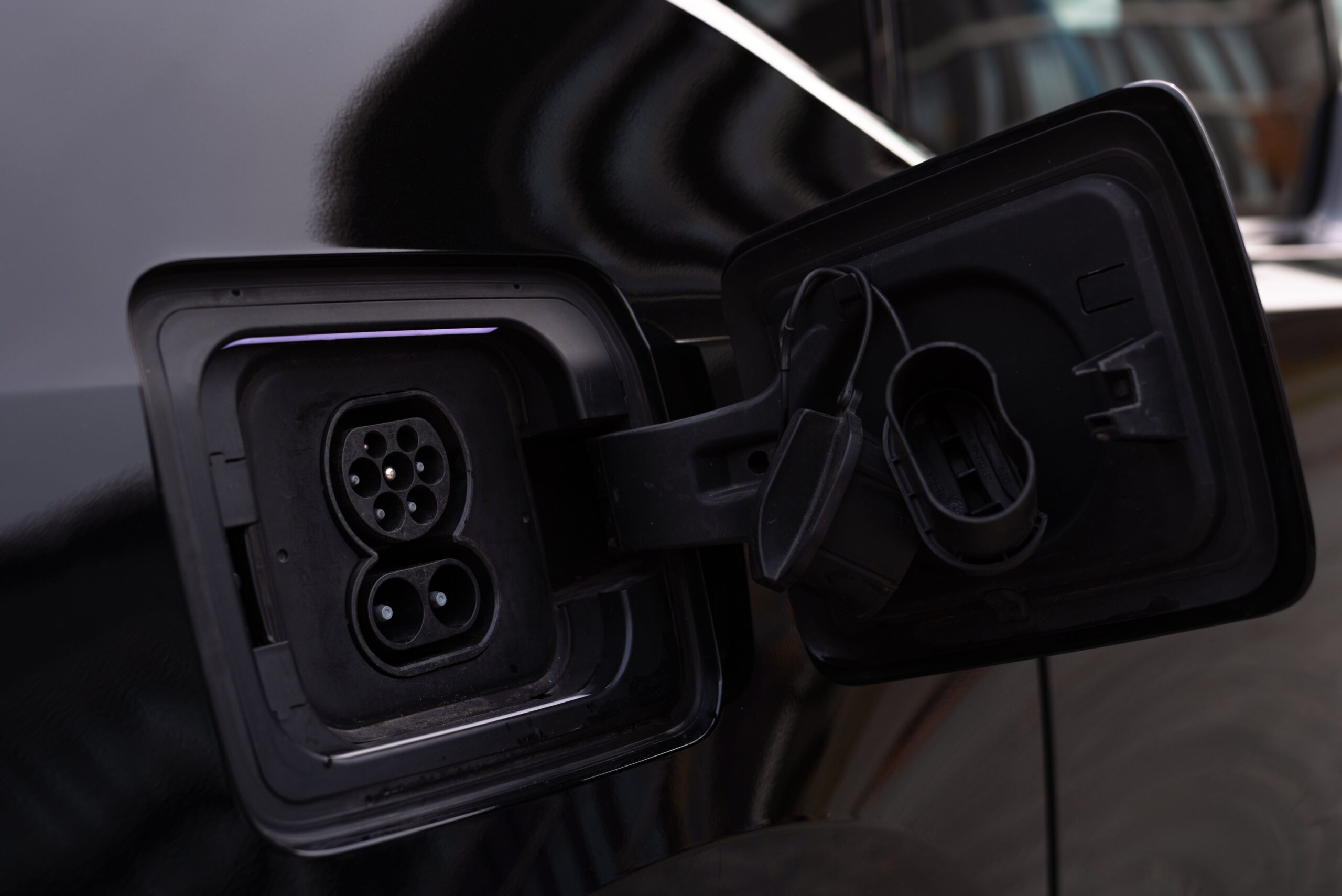
Range gets a lot of attention when choosing an electric car, but everyday charging habits are just as relevant. A car with a large battery is of little benefit if you have nowhere practical to charge it. Conversely, a smaller range does not have to be a problem if the car can recharge almost every night or working day.
Think in advance about your average mileage, regular routes and charging opportunities. In our article about shortleasing an electric car, you can read which other points matter when choosing an electric company car.
Electric driving with multiple employees
For employers with several electric cars, charging quickly becomes part of fleet management. Not every employee has the same charging options at home and not every role involves the same driving pattern. One fixed charging solution for the entire company therefore does not always work well in practice.
Start by mapping how many kilometres each employee or role covers, where the car is usually parked and how often charging is needed on the road. You can then determine how much charging capacity is required at the office and which employees also need access to home charging or public charging.
For employers: first determine the charging profile of your employees, then decide how many charging points you need. Simply counting the number of electric cars tells you very little about the charging capacity actually required.
Checklist for business EV charging
Are you choosing an electric company car or introducing several EVs into your fleet? Map out the charging options as well as the cars themselves. These points will give you a more realistic picture of everyday use.
- Calculate how many kilometres the car covers on an average working day.
- Check where the car is usually parked during the day and in the evening.
- Check whether home charging is possible and practical.
- Check how many charging points are available at the office.
- Review public charging options along regular routes and at common destinations.
- Make clear arrangements for recording and reimbursing charging costs.
- Allow for occasional longer journeys where rapid charging may be needed.
An electric company car that fits your working day
Electric driving works best when the car and charging options fit together. Do not look only at range or the monthly price, but at the entire working week: how far you drive, where the car is parked and when there is time to charge.
View the available shortlease cars or contact us if you would like to discuss which electric car and charging solution suit your business use.
Frequently asked questions about business EV charging
The best place to charge an electric company car depends on your daily use. If you can park at home, home charging can be practical. If the car spends long periods at the office, charging during the working day makes sense. For varied routes and longer journeys, public charging points and rapid chargers remain important.
Yes, you can charge an electric company car at home if a suitable charging option is available. With a private charging point, you need to consider the parking space, electrical connection and how business charging costs will be recorded and reimbursed.
It can be, but costs depend on the electricity tariff, charging point, charging card and provider. Public charging tariffs vary by location, and rapid charging may be priced differently from regular public charging. Compare the costs based on your own driving and charging pattern.
No, rapid charging is not something every business driver needs every day. If the car can recharge sufficiently at home or at the office, many journeys can be covered using regular charging points. Rapid charging is particularly useful on longer working days or when you need extra range quickly while travelling.
The number of charging points a company needs depends on the number of electric cars, daily mileage and how long cars remain parked at the office. Not every car needs to charge continuously or at maximum power at the same time. Smart charging management can help distribute the available charging capacity across several cars.
Yes, home charging, public charging and workplace charging can be combined very well. For many business drivers, this is the most practical approach. You can charge at home or at the office while the car is parked for longer periods and use public charging points for longer or unexpected journeys.